Pregnancy-Safe Skincare: Ingredients to Avoid and Use
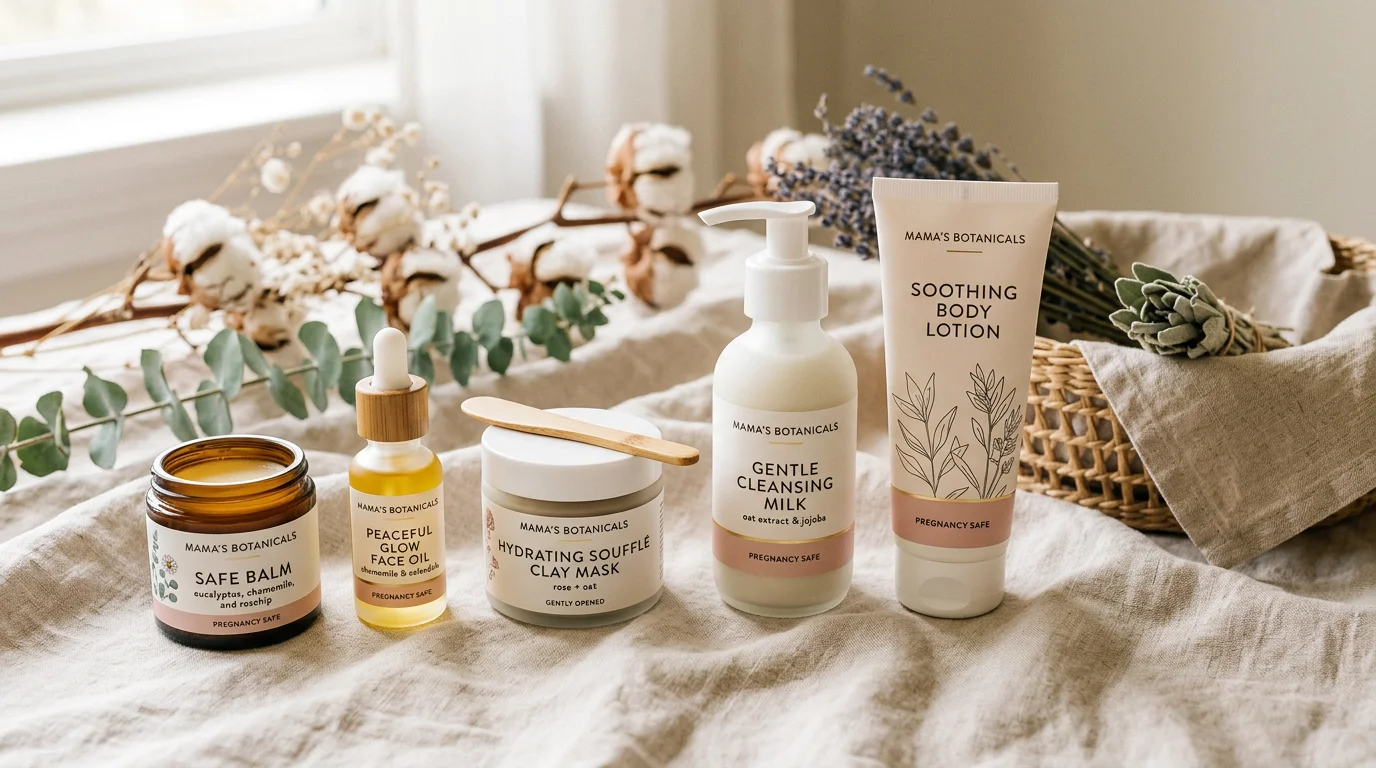
You just saw those two pink lines, and suddenly every bottle in your bathroom feels suspicious. The retinol you have been using for two years? Possibly off-limits. That acne wash? Depends on the concentration. Your favorite nail polish? Maybe fine, maybe not.
The frustrating part is that most beauty products do not come with pregnancy warnings on the label. And the advice you find online ranges from “everything is fine” to “throw out your entire skincare collection.” Neither extreme is helpful.
Here is what the actual medical research says, based on guidance from the American College of Obstetricians and Gynecologists (ACOG) and the American Academy of Dermatology (AAD).
Skincare Ingredients to Avoid During Pregnancy
Retinoids (All Forms)
This is the big one. Retinoids include tretinoin (Retin-A), adapalene (Differin), retinol, and retinaldehyde. They are all forms of vitamin A, and they belong to the same drug family as isotretinoin (Accutane), which is known to cause severe birth defects including intellectual disabilities, heart defects, and physical deformities.
While topical retinoids absorb far less than oral forms, the AAD still recommends avoiding all retinoids during pregnancy. The risk of birth defects from topical use has been estimated at 20 to 35 percent in some studies. That is not a number worth gambling on for smoother skin.
Stop using: tretinoin, adapalene, retinol, retinaldehyde, any product labeled “retinoid” or “vitamin A derivative.”
Hydroquinone
Hydroquinone is the go-to prescription ingredient for melasma and dark spots. The problem during pregnancy is its relatively high systemic absorption compared to other topical ingredients. Your body absorbs up to 35 to 45 percent of the hydroquinone applied to your skin. Because pregnancy-specific safety data is limited, both the AAD and most dermatologists advise skipping it entirely while pregnant or trying to conceive.
High-Concentration Salicylic Acid
Here is where the nuance matters. Low-dose salicylic acid (under 2%) in face washes and toners is generally considered safe by ACOG. They specifically list topical salicylic acid as an acceptable over-the-counter acne treatment during pregnancy.
What you should avoid: salicylic acid peels, any product above 2% concentration, and oral salicylates. The higher the dose and the longer it sits on your skin, the more gets absorbed.
Formaldehyde and Formaldehyde-Releasing Preservatives
Formaldehyde shows up in more products than you would expect. It is used as a preservative in some nail polishes, hair straightening treatments (keratin treatments are a major source), and even certain skincare products. It is classified as a known carcinogen and has been linked to miscarriage. Check labels for formaldehyde, formalin, methylene glycol, and quaternium-15.
Chemical Sunscreen Filters
The AAD recommends switching to mineral sunscreens during pregnancy. Chemical filters like oxybenzone, avobenzone, octocrylene, and homosalate absorb into the bloodstream through the skin. Mineral sunscreens with zinc oxide or titanium dioxide sit on top of the skin and are not absorbed.
Safe Skincare Alternatives During Pregnancy
The good news: effective alternatives exist for every ingredient on the avoid list.
Instead of Retinoids: Bakuchiol
Bakuchiol is a plant-derived ingredient that has shown similar benefits to retinol in clinical studies, including improved skin texture and reduced fine lines. It is considered safe during pregnancy. The Inkey List and Herbivore both make well-reviewed bakuchiol serums.
Other safe anti-aging options include peptides and niacinamide, both of which help with firmness and pore appearance without any pregnancy concerns.
Instead of Hydroquinone: Vitamin C and Niacinamide
For dark spots and the “pregnancy mask” (melasma that affects up to 70% of pregnant women), vitamin C serums and niacinamide are your best options. Neither carries pregnancy risks, and both have solid research behind them for fading hyperpigmentation over time.
Azelaic acid is another strong option. ACOG specifically lists it as safe during pregnancy, and it tackles both acne and discoloration.
Instead of Chemical Sunscreen: Mineral SPF
Look for sunscreens listing only zinc oxide, titanium dioxide, or both as active ingredients. EltaMD UV Elements and La Roche-Posay Anthelios Mineral are widely recommended by dermatologists. Aim for SPF 30 or higher, broad-spectrum, water-resistant.
For Acne: Benzoyl Peroxide and Glycolic Acid
ACOG confirms that topical benzoyl peroxide and glycolic acid are acceptable during pregnancy. Pair a gentle benzoyl peroxide wash (2.5% to 5%) with a glycolic acid toner a few nights per week, and you have a solid pregnancy-safe acne routine.
Is Hair Dye Safe During Pregnancy?
ACOG’s position is straightforward: most research suggests hair dye is not toxic to your fetus. The chemicals in hair dye absorb through the scalp in very small amounts, and animal studies using high doses have not found birth defects.
That said, some 2024 research has raised questions about a possible link between hair dye exposure and lower birth weight, particularly when used in the third trimester. The data is not conclusive, but if you want to minimize any potential risk, here is what dermatologists recommend:
- Wait until after the first trimester when possible
- Choose semi-permanent or demi-permanent dyes (lower chemical concentration)
- Opt for highlights or balayage, where the dye does not touch the scalp
- Ensure good ventilation during application
- Wear gloves if applying at home
Skipping hair color entirely for nine months is not medically necessary based on current evidence. But using lower-exposure techniques is a reasonable middle ground.
Is Nail Polish Safe During Pregnancy?
Standard nail polish may contain three chemicals of concern: formaldehyde (hardener), toluene (smooth application), and dibutyl phthalate or DBP (flexibility). All three have raised health concerns in studies involving high or prolonged exposure.
For occasional use, the exposure from painting your nails is minimal. Poison Control confirms that nail polish use during pregnancy is generally safe. The bigger concern is for nail salon workers who have daily, prolonged exposure to these fumes.
If you want to reduce exposure, look for polishes labeled “3-free” (no formaldehyde, toluene, or DBP) or higher. Brands like Olive and June (15-free), Butter London (8-free), and Essie (vegan, free of the major three) all offer safer formulations.
Tips for safer nail care during pregnancy:
- Apply polish in a well-ventilated room or outdoors
- Avoid gel or acrylic nails if possible (more chemical exposure during application and removal)
- Take breaks between manicures to let nails breathe
- If you visit a salon, choose one with good ventilation
The Bottom Line on Pregnancy-Safe Skincare
Pregnancy does not mean giving up your entire beauty routine. It means making targeted swaps for a handful of specific ingredients. The vast majority of skincare, haircare, and cosmetic products are perfectly fine to keep using.
When in doubt, check with your OB-GYN or a board-certified dermatologist. And read labels. The ingredients list on the back of the bottle tells you more than the marketing claims on the front ever will.
Once baby arrives, you may notice your hair changing too. Our guide to postpartum hair loss explains what to expect and what actually helps. And if you want to keep your beauty routine simple during pregnancy, check out our 5-minute skincare routine for moms.