Postpartum Hair Loss: Causes, Timeline, and Treatment
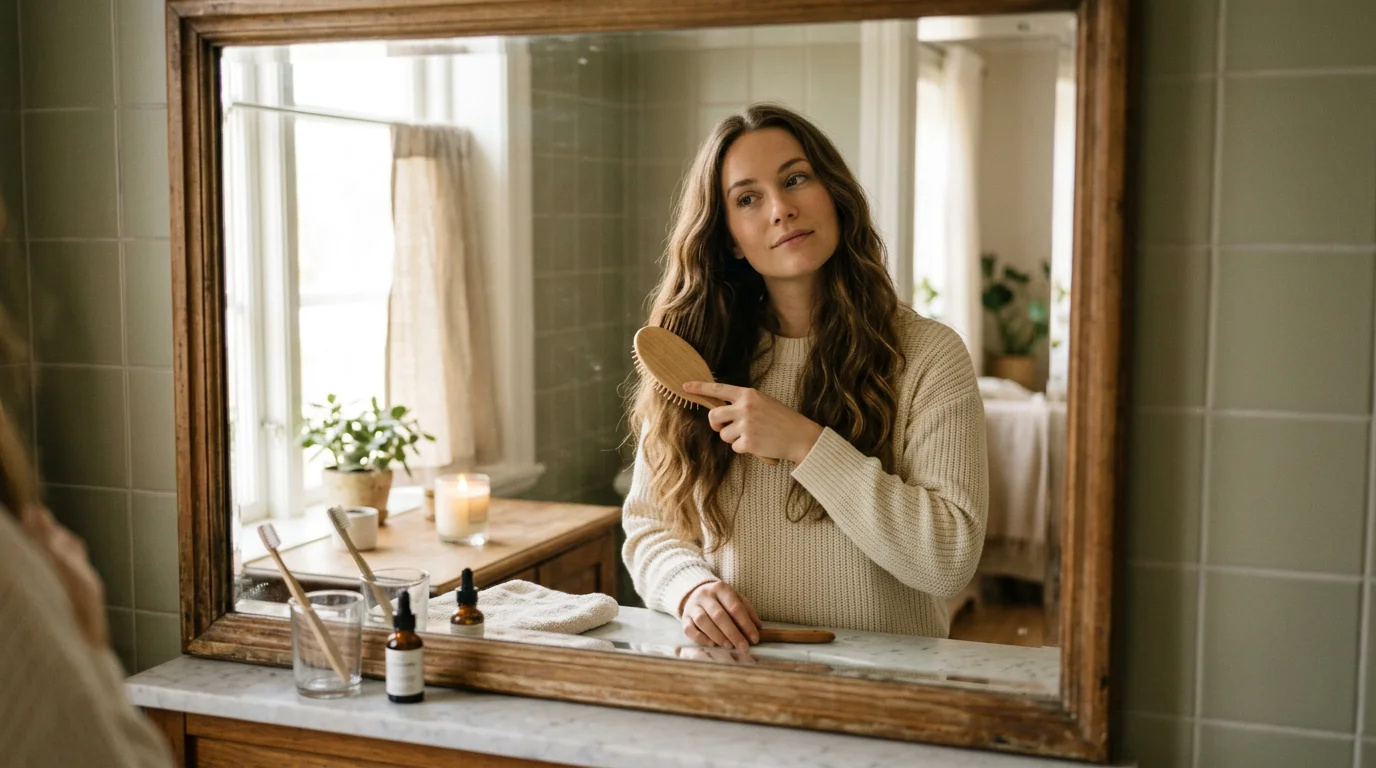
You survived pregnancy, labor, and the newborn fog. Now your hair is falling out in clumps. Every shower drain, every pillow, every brush stroke feels like a small betrayal. Before you spiral, take a breath: this is incredibly common, it has a clear medical explanation, and it will stop.
What Causes Postpartum Hair Loss
During pregnancy, elevated estrogen keeps your hair in the growth phase (called anagen) much longer than usual. You probably noticed thicker, shinier hair in your second and third trimesters. That wasn’t new hair growing in; it was old hair staying put.
After delivery, estrogen levels drop sharply. All those hairs that overstayed their welcome shift into the resting phase (telogen) at once, then fall out together a few months later. Dermatologists call this telogen effluvium, and it affects the majority of new mothers. You might lose up to 300 hairs per day during the peak, compared to the typical 50 to 100 (Cleveland Clinic).
This isn’t damage. It isn’t permanent. Your follicles are healthy. They’re just resetting.
Postpartum Hair Loss Timeline: When Does It Stop?
Understanding when things happen helps manage the anxiety:
- Months 1 to 2 postpartum: Shedding may begin. Some women notice it as early as six weeks after delivery.
- Months 3 to 4: This is usually the peak. The shower drain situation is at its worst. The American Academy of Dermatology notes that shedding typically peaks around four months after giving birth (AAD).
- Months 6 to 9: Shedding slows significantly. New baby hairs start appearing along your hairline.
- By 12 months: Most women have regained their normal hair fullness. In some cases, it can take up to 18 months, but that’s less common (Cleveland Clinic).
If you’re breastfeeding, the timeline may shift slightly because hormonal changes happen more gradually, but the overall pattern stays the same.
What Actually Helps
No product or supplement will stop telogen effluvium in its tracks. Your hair cycle has to run its course. But you can support regrowth, minimize breakage, and make your hair look and feel fuller while you wait.
Nutrition
Your body needs raw materials to grow new hair. Iron, zinc, vitamin D, and protein are the big ones. If you’re postpartum and breastfeeding, you’re already running at a nutritional deficit, so this matters more than ever.
- Keep taking your prenatal vitamin. It covers most of your bases for folate, iron, and B vitamins.
- Eat enough protein. Hair is made of keratin, a protein. Aim for lean meats, eggs, legumes, and Greek yogurt.
- Check your iron levels. Postpartum anemia is common and can worsen hair shedding. A simple blood test from your OB can confirm this (Healthline).
- Consider omega-3s. Fatty fish, walnuts, and flaxseed support scalp health.
Gentle Styling
The hair you have right now is more fragile than usual. Aggressive styling accelerates the loss.
- Skip tight ponytails, braids, and buns. Loose styles and soft scrunchies put less tension on weakened follicles.
- Use a wide-tooth comb or a wet brush instead of fine-tooth combs.
- Lower your heat tool temperatures, or air-dry when you can.
- Avoid heavy chemical treatments (relaxers, perms, heavy bleaching) until shedding has stopped.
Volumizing Products
The right products can make thinning hair look significantly fuller without causing further damage.
- Volumizing shampoos and conditioners: Look for lightweight formulas that won’t weigh hair down. Olaplex No. 4 Bond Maintenance Shampoo strengthens weakened bonds without adding heaviness.
- Dry shampoo at the roots: Adds instant lift and texture between washes.
- Root-lifting sprays: Applied to damp hair before blow-drying, these can add noticeable volume.
- Switch your part: Moving your part to the opposite side creates the illusion of more fullness along the hairline.
Postpartum Hair Loss Treatments That Don’t Work
There’s a lot of marketing noise aimed at postpartum moms. Save your money on these:
- Biotin supplements (for most people): Biotin deficiency is rare in the U.S. If you’re already eating a balanced diet and taking a prenatal, extra biotin is unlikely to make a difference. Cleveland Clinic notes that no studies have proven biotin supplements change hair appearance in people without a deficiency (Cleveland Clinic).
- “Hair growth” gummies with no clinical backing: Many are just expensive multivitamins with pretty packaging.
- Minoxidil while breastfeeding: This is a legitimate hair-loss treatment, but it is not recommended for nursing mothers. Talk to your doctor before using it.
- Scalp detoxes and “follicle-activating” serums: Most have zero clinical evidence behind them.
One exception worth mentioning: Nutrafol Postpartum is specifically formulated for new mothers and has some clinical data behind it. It includes ingredients like marine collagen and ashwagandha. It’s not cheap, but if you want a supplement beyond your prenatal, it’s one of the better-researched options. Still, talk to your doctor before adding anything.
When to See a Doctor
Postpartum hair loss is normal. But sometimes, what looks like typical shedding is actually something else. Make an appointment with your dermatologist or OB if:
- Shedding hasn’t slowed by 12 months postpartum. Prolonged shedding could signal a thyroid issue, which is common after pregnancy.
- You notice bald patches. Telogen effluvium causes diffuse thinning, not patchy loss. Bald spots may indicate alopecia areata, which needs different treatment.
- You have other symptoms. Fatigue, weight changes, or mood shifts alongside hair loss could point to postpartum thyroiditis or anemia.
- Your hair was already thinning before pregnancy. If you had a pre-existing condition like androgenetic alopecia, the postpartum phase can make it worse, and early treatment helps.
A dermatologist can do a pull test and blood work to rule out underlying conditions. Don’t feel silly for asking. Hair loss is the second most common concern new mothers bring up at postpartum visits (WebMD).
When Does Postpartum Hair Loss End?
Postpartum hair loss is temporary, hormonally driven, and almost universal. It feels alarming, especially when you’re already exhausted and adjusting to a new baby. But your hair will come back. In the meantime, eat well, be gentle with your strands, and give yourself grace. You grew a human. Your body is recalibrating. The hair will follow.
If you are also navigating postpartum body image changes, know that you are not alone. And for days when your hair needs a quick refresh, our guide to the best dry shampoos for busy moms can help you look put-together with zero effort.